





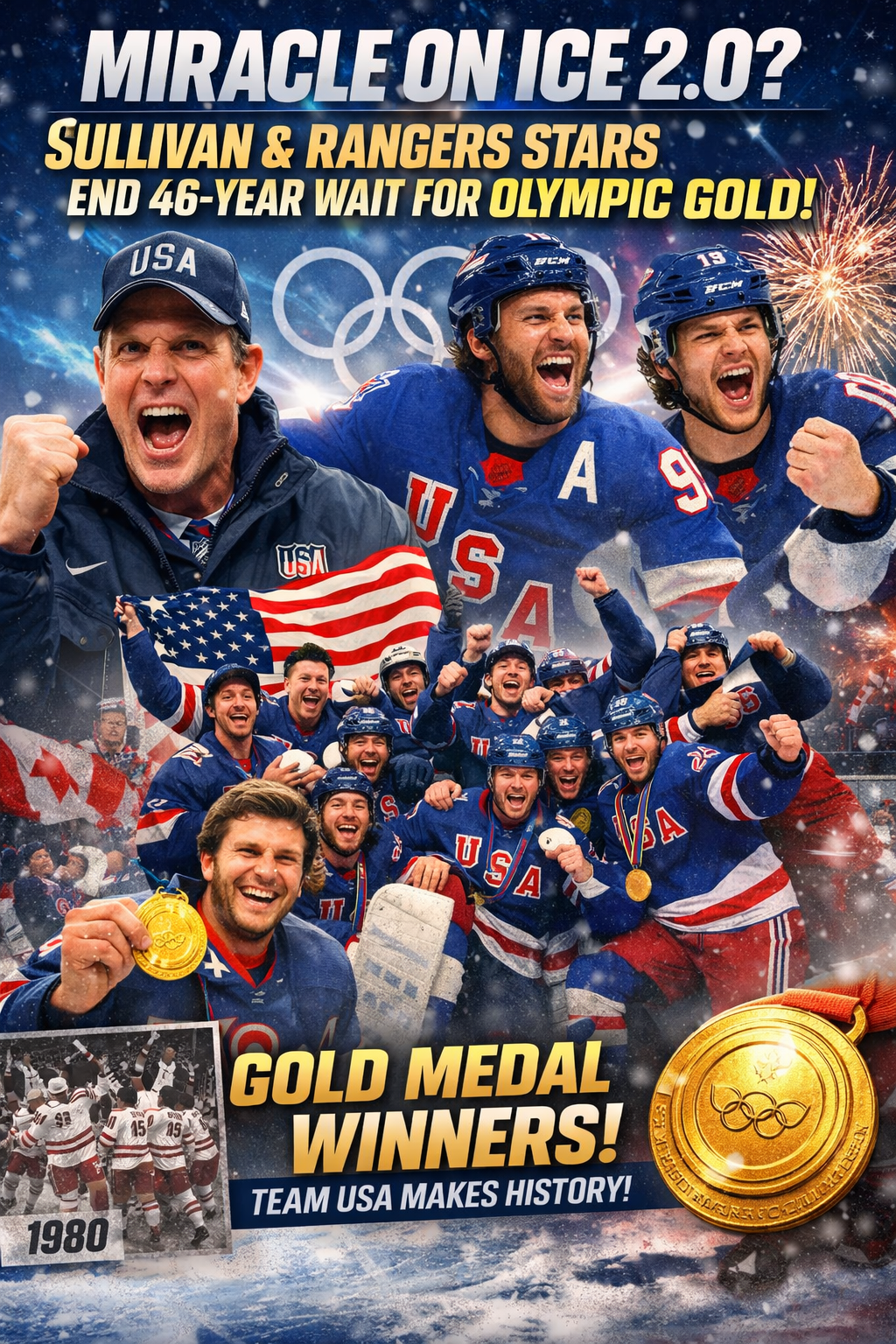
Miracle on Ice 2.0? Mike Sullivan and Rangers Stars End 46-Year Wait for Olympic Gold!
For the first time since the iconic triumph at the 1980 Winter Olympics, the United States men’s hockey team is back on top of the Olympic podium — and this time, it’s not just a miracle. It’s mastery.
In a tournament packed with NHL-caliber talent and sky-high expectations, head coach Mike Sullivan orchestrated one of the most compelling runs in modern Olympic hockey history. Blending grit, structure, and fearless offense, Sullivan’s squad delivered a golden performance that will be remembered for generations.
A New Chapter in American Hockey History
The shadow of 1980 has loomed large over every U.S. Olympic hockey team for more than four decades. The legendary upset of the Soviet Union remains one of the greatest moments in sports history. But this latest triumph wasn’t about reliving the past — it was about redefining the present.
From the opening puck drop of the tournament, Team USA played with pace, discipline, and belief. Their defensive structure frustrated elite European powerhouses, while their speed in transition turned tight games into statement wins.
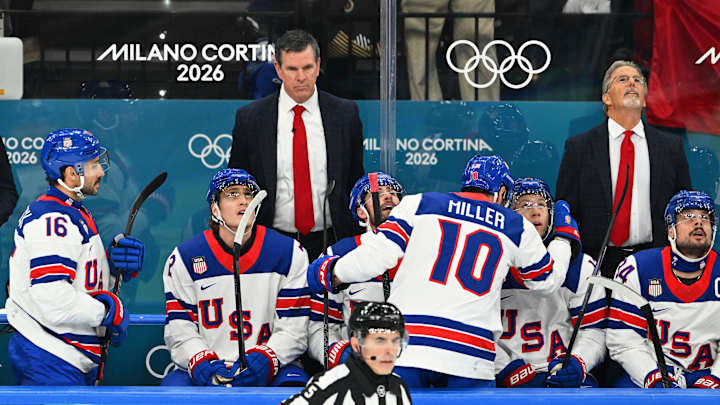
A key storyline of the tournament was the dominant performance of stars from the New York Rangers. Their chemistry translated seamlessly to the international stage, anchoring both ends of the ice.
The Rangers’ contingent delivered when it mattered most — scoring clutch goals, killing penalties in high-pressure moments, and controlling the tempo against some of the world’s most dangerous forwards. Their leadership proved invaluable in the gold medal game, where poise under pressure separated champions from contenders.
Sullivan’s Tactical Brilliance
Sullivan’s coaching fingerprints were all over this historic run. Known for his detail-oriented systems and emphasis on accountability, he built a team identity centered on relentless forechecking and defensive responsibility.
In the gold medal showdown, the U.S. executed a near-flawless game plan — limiting turnovers, winning battles along the boards, and capitalizing on special teams opportunities. The result? A composed, clinical victory that left no doubt about who the best team in the tournament was.