







NEW ORLEANS SAINTS TO BUILD FOOTBALL’S NEW CATHEDRAL — $879 MILLION CAESARS SUPERDOME MEGA-EXPANSION APPROVED
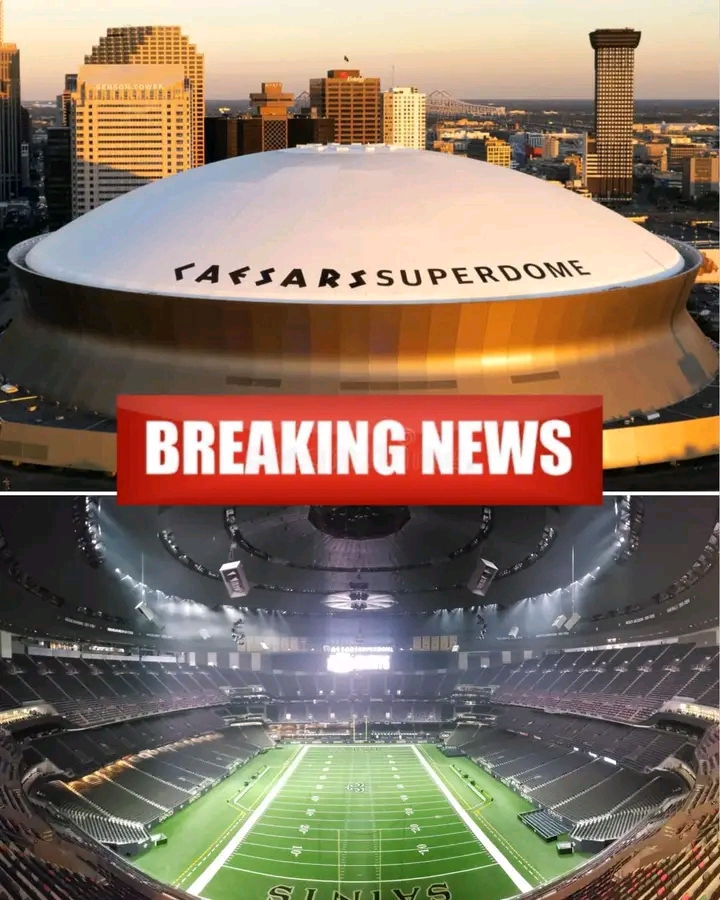
NEW ORLEANS — In a decision city leaders are already calling “a second line for the soul of the sport,” the New Orleans Saints and state officials have approved an $879 million mega-expansion of the Caesars Superdome, transforming the iconic venue into what developers boldly describe as “football’s new cathedral.”
The plan, unveiled early Tuesday morning to the sound of brass bands and construction drones hovering overhead, will reimagine the Superdome as a year-round monument to football, culture, and spectacle. Construction is scheduled to begin after the 2026 season, with completion targeted for the Saints’ 2029 home opener.
According to project renderings, the expanded Superdome will feature a soaring glass-and-steel dome extension shaped like a fleur-de-lis, visible from across the Mississippi River. Inside, seating capacity will increase modestly to 83,000, but officials emphasized that the real upgrade lies in experience rather than numbers.
“This isn’t just a renovation,” said Saints owner Gayle Benson in a statement. “It’s a declaration. The Superdome has always been sacred ground. Now it becomes a living cathedral — one that honors our past and elevates our future.”
Among the headline features is a 360-degree, ultra-high-definition “Halo Board” encircling the stadium roof, capable of projecting real-time stats, cinematic replays, and pregame light shows synced to live jazz performances. Engineers claim it will be visible from space, though NASA declined to comment.
Fans will also find themed “parish sections” throughout the stadium, each celebrating a different era of Saints history. One level will replicate the gritty charm of old Tulane Stadium, while another leans fully into modern luxury with chef-driven Creole dining, private brass-band serenades, and climate-controlled seating calibrated to “perfect fall football weather.”
Perhaps the most ambitious element is the Hall of the Black and Gold, a museum and cultural space built into the stadium’s outer ring. It will chronicle not only Saints legends, but also New Orleans’ broader relationship with resilience, music, and sport — complete with interactive exhibits and a preserved section of the original 1975 Superdome concrete.
State officials project the expansion will create more than 6,000 construction jobs and generate billions in long-term tourism revenue, positioning New Orleans as the premier destination for Super Bowls, College Football Playoffs, and global sporting events.
Critics have raised concerns about cost and public funding, but supporters argue the Superdome has always been more than a stadium.
“In New Orleans,” said one city council member, “churches have steeples, and football has the Dome. This just makes it official.”
If all goes according to plan, the Saints won’t just take the field in the next decade — they’ll take the altar.